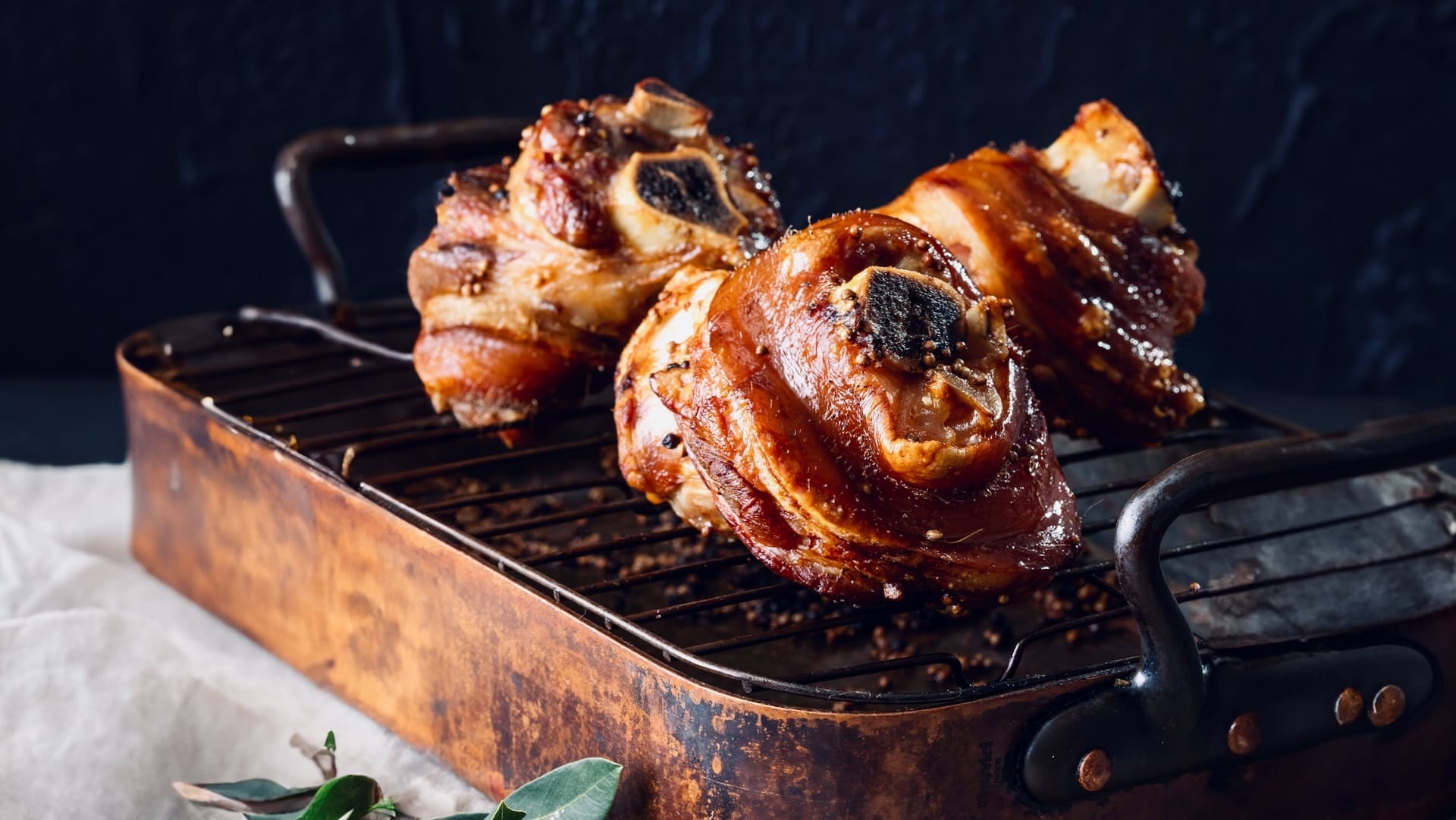
Prepare and sear the shanks: Preheat your oven to 160°C. Pat the pork shanks dry with paper towel. Mix the coarse salt, black pepper, smoked paprika, dried thyme, and dried rosemary together and rub the spice mixture generously all over each shank. Heat the oil in a large heavy-based pot or Dutch oven over medium-high heat. Sear the shanks in batches, turning regularly, for 8-10 minutes until deeply browned on all sides. Remove and set aside.
Build the braise: In the same pot, reduce the heat to medium and add the chopped onion. Cook for 4-5 minutes until softened, scraping up any caramelised bits from the base of the pot. Add the garlic and cook for a further minute. Stir in the tomato paste and cook for 2 minutes until it darkens slightly. Pour in the red wine and allow it to bubble and reduce for 3 minutes. Add the beef stock, fresh thyme sprigs, and bay leaf, and stir to combine.
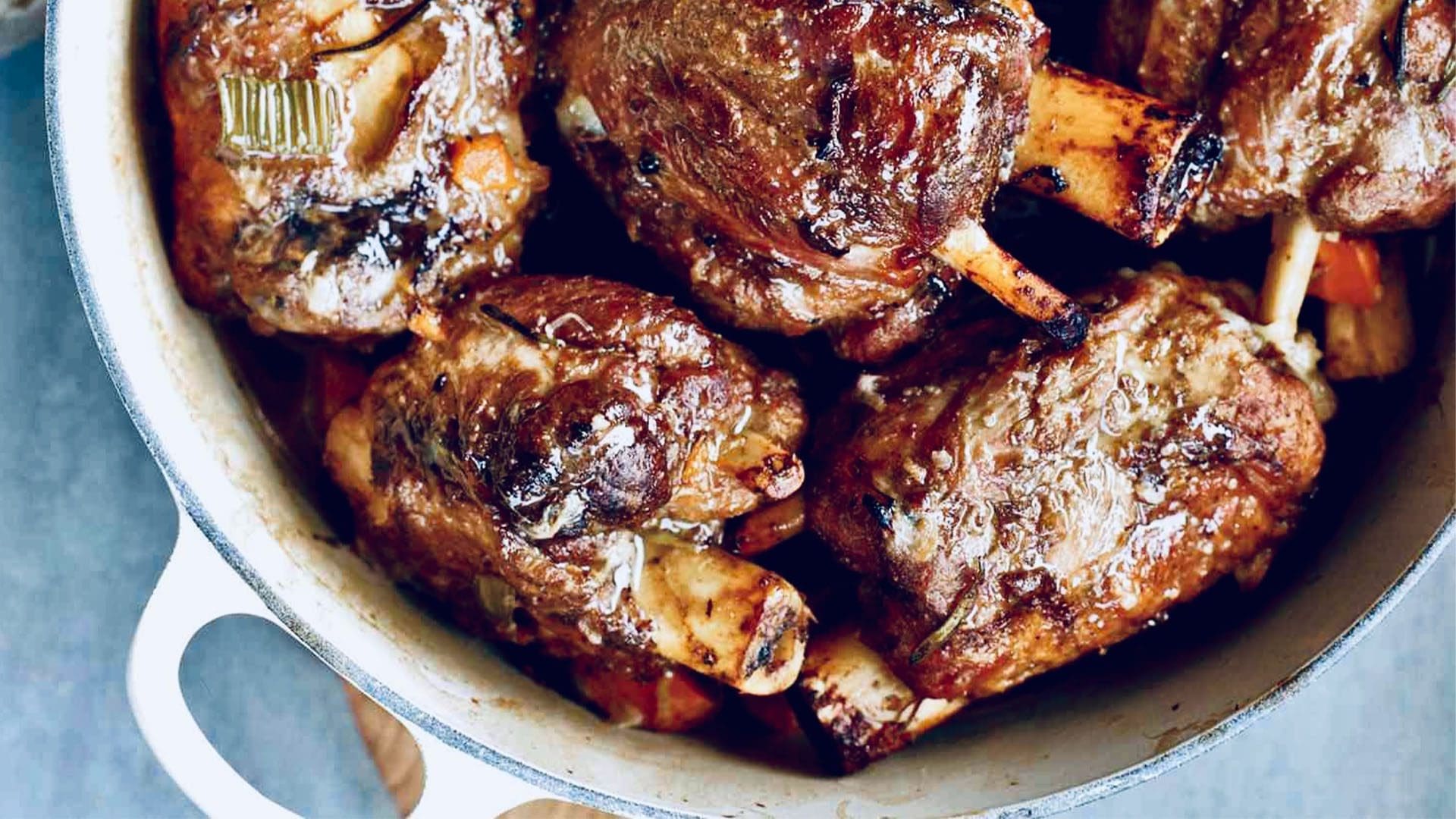
Braise the shanks: Return the seared shanks to the pot, ensuring they are at least halfway submerged in the liquid. Bring to a gentle simmer, then cover with a lid and transfer to the preheated oven. Braise for 2.5 to 3 hours, turning the shanks once halfway through, until the meat is completely tender and pulling away from the bone.
Make the creamy mash: About 30 minutes before the shanks are done, boil the potatoes in salted water until completely tender, about 20 minutes. Drain well and mash thoroughly. Beat in the butter and warm cream or milk until the mash is smooth and creamy. Season with salt and white pepper to taste, and keep warm.
Finish the jus: Remove the shanks from the pot and set aside to rest. Discard the bay leaf and thyme sprigs. If the braising liquid is thin, simmer it on the stovetop over medium heat for 5-10 minutes until reduced to a glossy, sauce-like consistency. Taste and adjust seasoning.
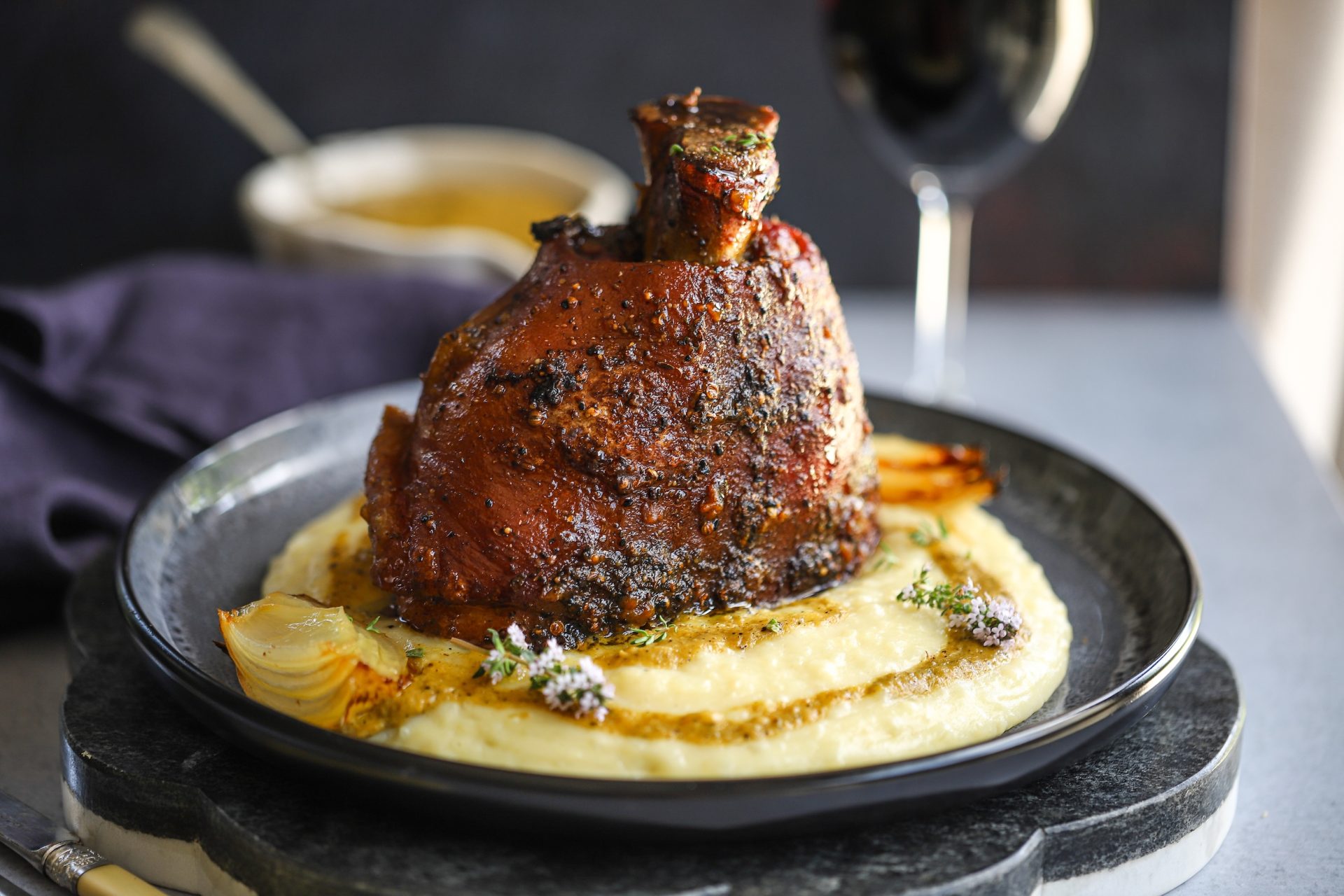
Serve: Spoon a generous mound of creamy mash onto each plate. Place a shank on top and spoon the red wine jus over and around. Garnish with fresh thyme flowers or fresh herb sprigs.
The shanks can be braised a day ahead and stored in their cooking liquid in the fridge overnight. Reheat gently on the stovetop, covered, before serving. This resting time actually improves the flavour.
For a richer jus, strain the braising liquid, skim off any surface fat, and reduce it further before serving. Pork shanks are an economical cut that deliver exceptional results when given enough time in a low, slow braise.